Which health problems are big enough, and changeable enough, that spending a medical career on them could make a real difference to millions of people?
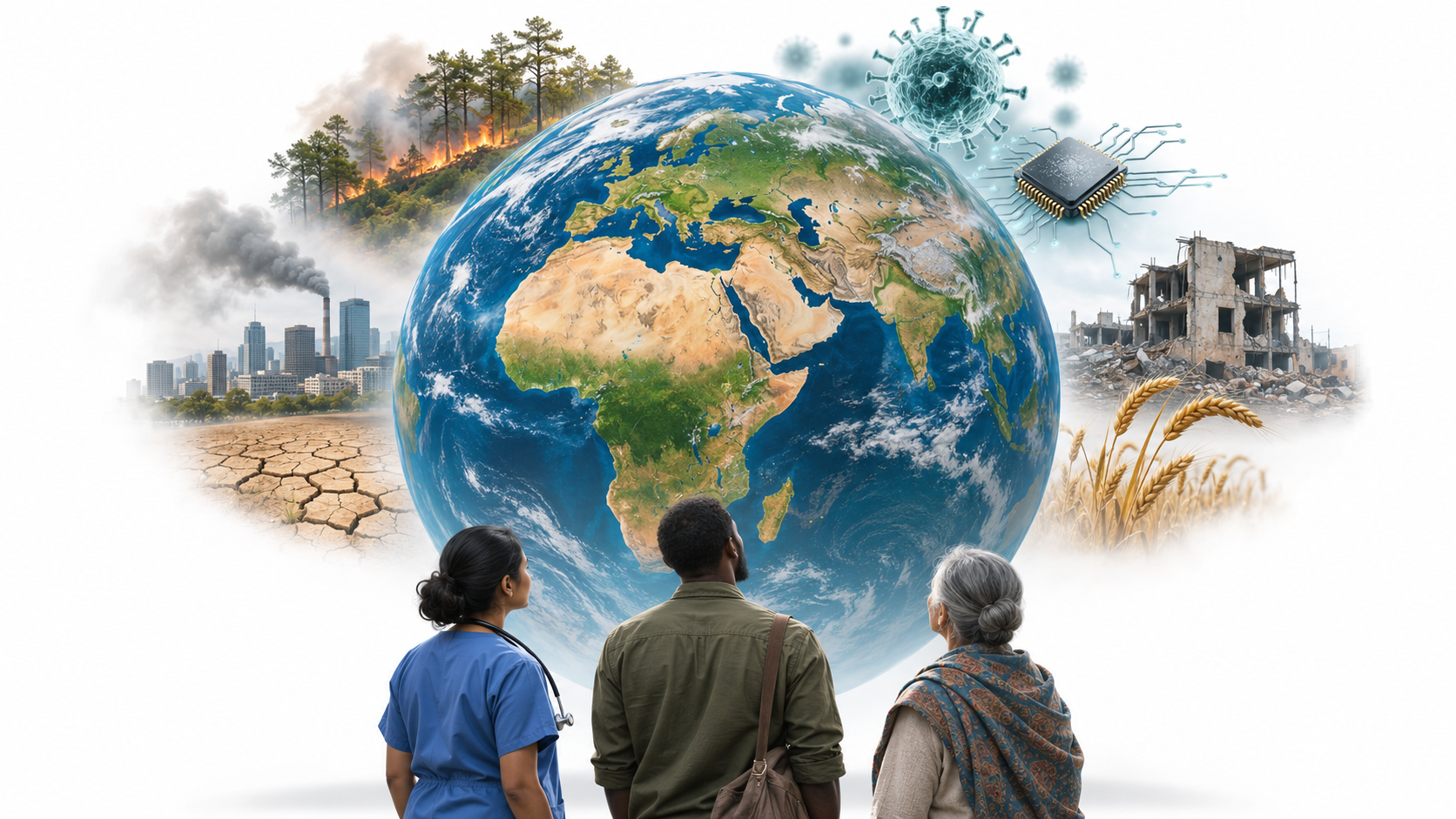
The Lancet Commission on 21st Century Global Threats to Health has set out to address this question systematically, across the full range of threats to health, with the same yardstick applied to each. It is the most careful attempt so far to compare very different threats on a common scale, and it deserves attention from anyone deciding where to point a medical career.
Contents
How they measured a “threat”
Seventeen threats
A ranking of size, not of priority
What the Commission recommends
What this means for a medical career
How they measured a "threat"
The Commission's metric is cumulative expected amenable disability-adjusted life-years (DALYs) between 2025 and 2100. For each threat and each of 204 countries, the team built a plausible best and a plausible worst scenario. They measured threats by the expected cumulative magnitude of death and disability combined that could be reduced through policy action by the end of the 21st century. They call this the “amenable burden”.
Malicious use of AI and nuclear conflict could not be modelled from historical data. For these two the Commission relied on structured expert elicitation and superforecasters, and acknowledges that these estimates are therefore far more uncertain than the others.
Seventeen threats
Starting from several hundred diseases, risk factors and social drivers, the Commission sorted threats into a pyramid. At the top sit two threats with extinction potential, malicious use of AI (including AI-enabled bioweapons) and nuclear conflict leading to nuclear famine. Below them are 15 "major catastrophic" threats, each forecast to cause more than a billion cumulative DALYs by 2100. In order of amenable burden:
Obesity (high BMI, poor diet and low physical activity together)
Low educational attainment
Income inequality
Poor mental health
Unhealthy ageing
Conventional conflict
Smoking
High blood pressure
Antimicrobial resistance
Naturally occurring pandemics
High alcohol use
Climate change
Air pollution
Collapse of development assistance for health
Childhood malnutrition
The amenable burden ranges from about 1 billion DALYs for childhood malnutrition to 23 billion for obesity. For comparison, COVID-19 caused roughly 500 million. Obesity is the largest threat by some distance and the leading one in 154 of the 204 countries. Low educational attainment (16 billion) and income inequality (14 billion) come next, then malicious use of AI (10 billion), nuclear conflict and poor mental health (9 billion each), and unhealthy ageing, conventional conflict and smoking (7 to 8 billion).
Two of the three largest threats, education and income inequality, are not “medical problems” in the usual sense. About half of education's amenable burden comes from lower disease rates in more educated populations and about half from the smaller populations that follow lower fertility. Other major threats such as obesity, blood pressure, smoking, alcohol, mental illness and chronic disability in older age are clinical problems that doctors deal with every day. The Commission’s reference scenario projects that healthy life expectancy will rise more slowly than life expectancy, so more years will be lived with many of these chronic illness.
The collapse of development assistance for health is on the list, which is a sign of the times we have been living through over recent years. Climate change comes out lower than many readers will expect, at about 1.9 billion DALYs. The Commission is careful to say this counts direct health pathways only, leaves out migration, sea-level rise and drought effects on nutrition, and that the uncertainty runs in both directions.
Geography matters a great deal. In sub-Saharan Africa the top threat is low educational attainment, not obesity, and income inequality is second in both sub-Saharan Africa and south Asia. Income inequality is the leading threat in 19 countries and the least important in 70. The right priority depends heavily on where you work.
A ranking of size, not of priority
The authors are emphatic that their work does not provide a ranking of policy priority, and list the threats alphabetically to make the point. A smaller expected burden can still warrant more urgency, because of the risk of catastrophe (nuclear war, malicious AI) or because important pathways are not yet quantified (climate change).
What the Commission recommends
The report ends with three cross-cutting recommendations:
Threat-ready health systems, with a dedicated unit in government for foresight, prevention, preparedness and protection, built on strong primary care and sustained financing rather than crisis response.
Much more investment in breakthrough innovation where current tools fall short, such as pan-strain vaccines, new classes of antibiotics, cheaper oral obesity drugs and carbon removal, alongside governance of frontier AI and AI-enabled biological design tools.
A Monitor of 21st Century Global Threats to Health, updated annually and presented to the G20, the UN General Assembly and security forums, to counter the cycles of concern and neglect that follow each crisis.
What this means for a medical career
The Commission was not writing a careers guide, but it’s work is very helpful for those planning impactful careers. Some of the directions it points to:
Prevention at population level. The largest threats in most countries can be addressed through public health, health policy and primary care system design. The commercial interests behind tobacco, alcohol and food make policy expertise especially valuable.
Research and innovation. Clinician-scientists and people in clinical trials, regulation and product development are needed, for example for new antibiotics, stewardship for AMR, vaccines, and better obesity treatments.
Biosecurity, AI governance and nuclear risk. These are small fields where people with medical and scientific credibility are scarce but have a strong track record and an important role to play.
Health systems in low-income settings. Health inequity, access to healthcare, education, conflict and many other challenges are key to risks in low and middle income countries of the Global South. The loss of donor funding and absence of clearly identified alternative future financing pathways further complicate the picture. Health financing, system strengthening and building national capacity to plan for rapid demographic change are areas where doctors can contribute.
Foresight and health metrics. The suggested health threat units within governments will benefit from people who understand both clinical medicine and modelling.
Reference: Murray CJL, Kanem N, et al. The Lancet Commission on 21st century global threats to health. Lancet 2026; published online Oct 11. doi:10.1016/S0140-6736(26)01714-9
Co-chaired by Christopher Murray of the Institute for Health Metrics and Evaluation (IHME) and Natalia Kanem of the UN Population Fund, bringing together commissioners from global health, economics, policy and security, including Sally Davies, Peter Piot and Soumya Swaminathan, with the IHME forecasting team.